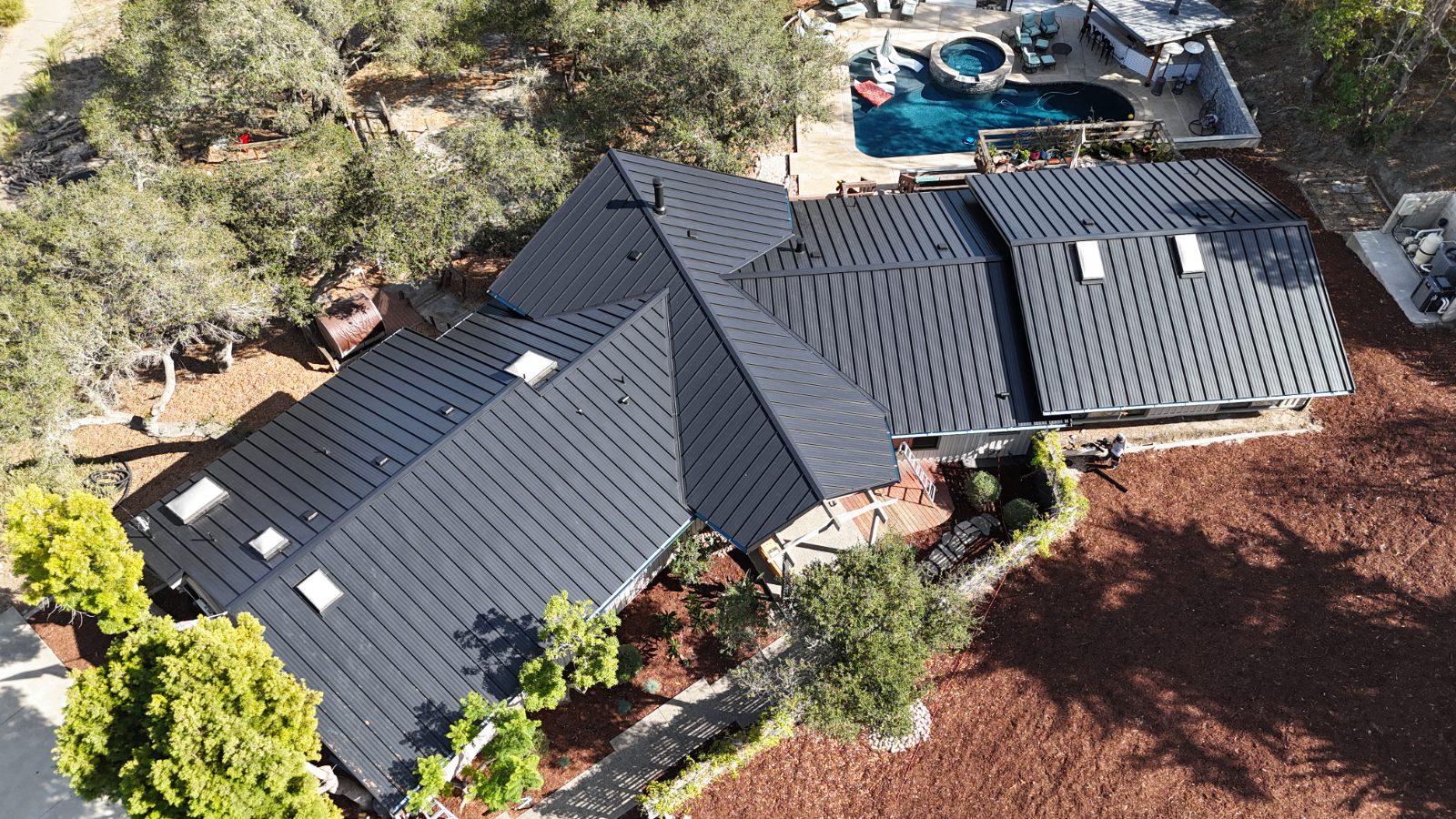
Interlocking Metal Panels
Snap Lock Standing Seam Metal Roofing
See whether snap lock roofing fits your property. Get a Free Estimate
Interlocking Metal Panels
See whether snap lock roofing fits your property. Get a Free Estimate
Snap lock standing seam roofing is a specific type of metal roofing that uses interlocking panel edges. As adjacent panels are installed, their seam profiles engage to create the raised standing seam connection. Unlike certain mechanically seamed systems, snap lock profiles do not require the same field-seaming process along every panel joint.
This system appeals to owners who want the clean appearance of standing seam metal roofing. However, panel compatibility with roof slope, drainage conditions, and wind exposure must be confirmed. Not every roof is suitable for every snap lock product, particularly where water drains slowly or may accumulate.
## The Snap Lock Connection Snap lock panels use shaped edges designed to engage with neighboring panels during installation. Their appearance is similar to other standing seam systems, with raised lines extending along the roof slope. Product details vary. Some systems use concealed clips, while others have specific fastening arrangements integrated into the panel edges. The correct approach is determined by the manufacturer's installation instructions. ## Roof Slope and Water Management Minimum slope requirements are among the most important considerations for snap lock roofing. Interlocking seams should not automatically be assumed suitable for very low-slope roofs. Manufacturers establish application limits for individual panel systems. Roof areas with complicated drainage, concentrated runoff, or potential ponding require particular attention. Where the roof falls outside the approved limits for a snap lock product, a different roofing system may be necessary. ## Panel Alignment and Roof Preparation Snap lock systems depend on accurate panel engagement. The supporting surface should meet the flatness and preparation requirements of the chosen product. Irregular substrates may affect panel alignment and the appearance of the completed roof. Panel lengths, fastening locations, and thermal movement considerations also influence installation. Large roof planes can require different planning from short sections over an entry or addition. ## Wind and Coastal Conditions Santa Barbara County includes properties with substantial wind exposure, particularly near open areas and certain coastal or hillside locations. Product approvals, attachment details, and building-specific wind design should guide system selection. In marine environments, protective finishes and compatible fastening components are also important. A product's suitability for coastal use should be confirmed rather than assumed. ## Appearance and Color Choices Snap lock roofing offers the distinct linear appearance associated with standing seam systems. Panel width, rib height, color, and surface finish affect the final look. Some property owners prefer understated finishes that blend into the building, while others want metal roofing to become a visible design feature. The right choice should consider the home's proportions and surrounding architecture.
Snap lock panels are designed for a particular engagement sequence, attachment method, and roof application. Proper planning includes substrate preparation, panel orientation, fastening, edge details, and required movement allowances. These details support both appearance and weather performance. A streamlined seam connection should not be mistaken for an installation that requires little preparation. Corners, roof penetrations, valleys, and transitions still need appropriate flashing and careful integration with the panel system.
Residential snap lock roofing is often considered for gable roofs, contemporary home designs, and roof sections with relatively straightforward geometry. Its raised seams create a repeated pattern that can complement clean architectural lines. The product must still be appropriate for the roof's slope and exposure. For homes with several intersecting roof sections, skylights, or dormers, panel layout and flashing become more involved. Understanding these details early can help owners make informed design decisions.
Snap lock and mechanically seamed roofing both belong to the broader standing seam family, but they use different methods to close the panel joints. Mechanically seamed systems require a separate seam-forming operation and can offer configurations suited to particular performance requirements. Neither category should be considered universally better for every project. Roof slope, wind design, manufacturer testing, and installation conditions determine which approach may be suitable. Comparing specific products is more useful than comparing names alone.
Metal panel finishes influence appearance and resistance to environmental exposure. Owners near the coast should examine manufacturer guidance for salt air, cleaning, and finish maintenance. Compatible accessories are also part of the overall system. Regular inspection should include drainage paths, flashing, roof penetrations, and areas where debris collects. Following the product's maintenance recommendations helps preserve both appearance and long-term performance.
We help explain where snap lock fits within the larger standing seam roofing category.
We emphasize that snap lock products must match the drainage conditions of the roof.
Alignment, attachment, movement allowances, and flashing all deserve careful consideration.
Wind and coastal conditions should be part of material and fastening decisions.
Wondering whether snap lock standing seam roofing is suitable for your home? Share the details of your roof.
Free — no obligations
Review slope, geometry, drainage, and the condition of the supporting roof surface.
Consider approved applications, seam profiles, fastening arrangements, and material choices.
Account for roof dimensions, visual alignment, thermal movement, and transitions.
Address flashing, wind requirements, coastal compatibility, and drainage.
Review product care recommendations and appropriate roof inspection practices.