Raised Seam Roofing
Standing Seam Metal Roofing in Santa Barbara
Explore standing seam roof designs for your home. Get a Free Estimate
Raised Seam Roofing
Explore standing seam roof designs for your home. Get a Free Estimate
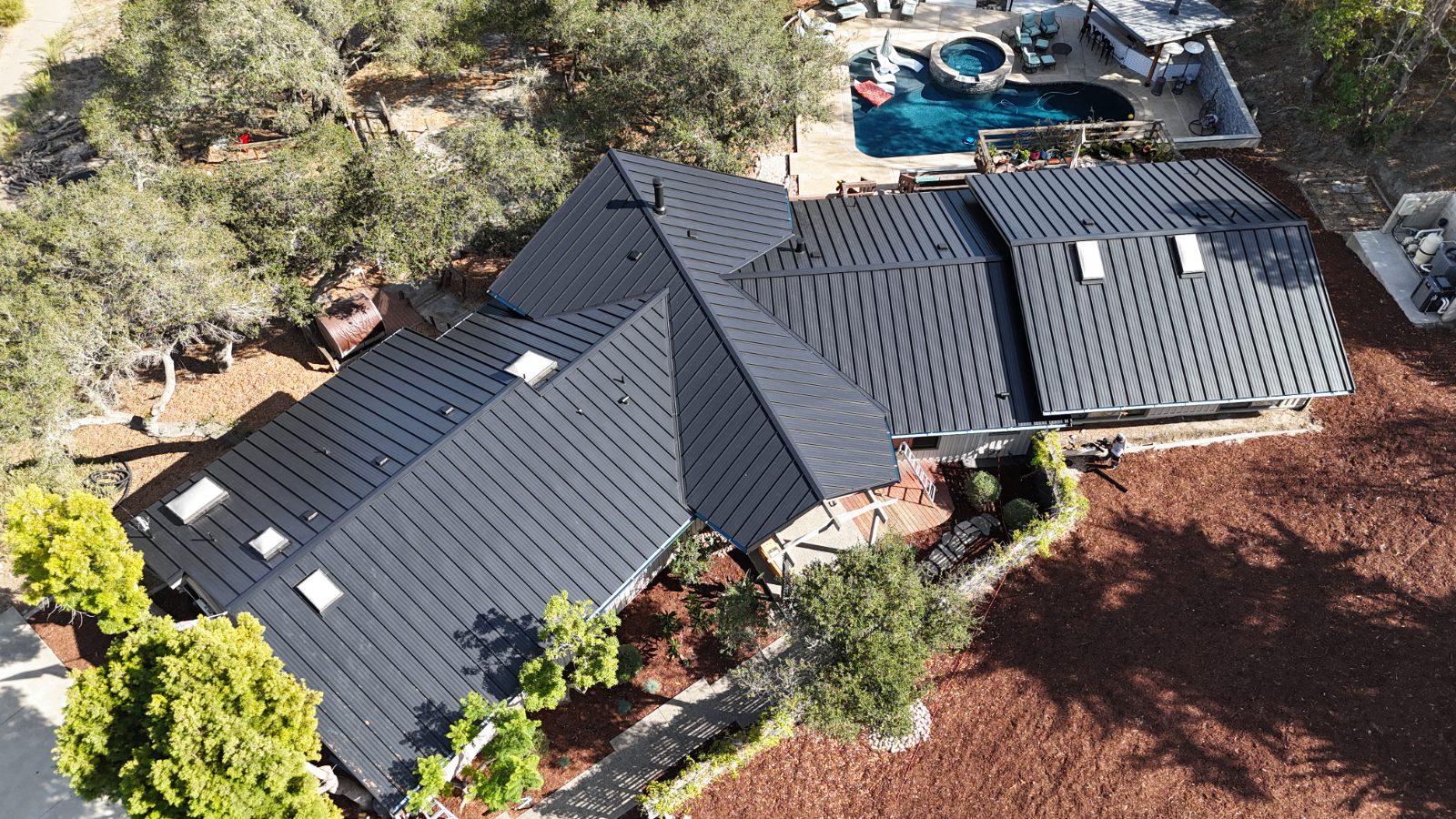
Standing seam metal roofing is recognized by its raised seams and long, defined panel lines. It is commonly considered for properties where a simple architectural appearance and concealed fastening approach are priorities. Panel dimensions, seam configurations, materials, and finishes can all affect the final result.
For Santa Barbara County property owners, standing seam roofing also raises important questions about coastal exposure, roof pitch, wind conditions, and compatibility with the building's design. Choosing a suitable system involves more than selecting a panel color. The roof assembly and seam type must match the conditions of the project.
## How Standing Seam Roofing Works Standing seam roofing uses metal panels joined along raised vertical seams. In many systems, the primary panel fasteners are concealed beneath the adjoining panels or seam connections. This reduces exposed fastener penetrations in the main panel field. The exact joining method depends on the product. Some systems use snap-together connections, while others require mechanical seaming equipment. These approaches have different installation requirements and may be approved for different slopes and exposure conditions. ## Why Roof Pitch Matters Standing seam is not one universal system. Minimum roof slope requirements vary according to panel design, seam construction, and manufacturer testing. A system suitable for a steep roof may not be appropriate for a lower-slope section. Roof pitch influences how quickly water drains and how the seams must manage rain. Low-slope applications may require a more specialized seam and additional detailing. ## Panel Movement and Fastening Metal expands and contracts as temperatures change. Depending on the panel design and length, the attachment system must allow appropriate thermal movement while keeping the panels securely connected to the structure. Fastener placement, clip design, panel alignment, and substrate preparation can all influence the completed roof. Incorrect installation may affect panel appearance and weather performance. ## Coastal Exposure in Santa Barbara Marine conditions place particular demands on metal roofing finishes and accessories. Steel, aluminum, and other products have different corrosion-related considerations, and each manufacturer may establish limits for coastal installations. Fasteners and clips should be compatible with the selected panels. Protective coatings, cut edges, and areas where moisture accumulates also deserve attention. ## Appearance and Roof Geometry Standing seam roofing works especially well visually on long, uninterrupted roof planes. Roofs with dormers, skylights, multiple valleys, or unusual angles can still be considered, but they require more involved panel layouts and flashing details. Panel width and seam height change the roof's visual rhythm. Narrower panels create more repeated lines, while wider panels may produce a calmer appearance. Material finish and color complete the overall look.
Many standing seam products use clips or concealed fastening arrangements beneath their panel joints. This keeps most routine attachment points out of the exposed panel surface and supports the characteristic clean appearance of the system. Fastener design differs among manufacturers and must be matched to the panel profile. Concealed fastening does not eliminate the need for careful detailing. Clips, movement allowances, transitions, and edge conditions still require appropriate installation. It is important to understand how the selected system is designed to perform.
Mechanically seamed roofing uses equipment to fold or close panel seams after placement. Some profiles provide additional seam engagement and are designed for demanding roof conditions or lower slopes, subject to the manufacturer's specifications. The seam configuration and installation process are important parts of system selection. The roof's geometry, exposure, and drainage requirements help determine whether a mechanically seamed product is appropriate.
Standing seam roofing can become a prominent part of a home's appearance. The continuous lines often suit contemporary houses, mountain-inspired designs, and additions where metal is used as a deliberate architectural feature. On traditional homes, finish selection and roof proportions can help the material blend with existing details. We encourage owners to compare panel sizes and visible seam patterns before making a choice. The same finish can create different visual effects depending on roof pitch and viewing distance.
Standing seam roofing generally requires periodic inspection and care suited to the product. Roof edges, flashing connections, sealants, penetrations, and drainage areas should be included in maintenance planning. Coastal deposits and debris accumulation may require attention according to manufacturer guidance. Owners should avoid unsuitable cleaning chemicals and unnecessary walking on panels. Proper inspection techniques help protect finishes and reduce the chance of accidental damage.
We explain the differences among standing seam configurations instead of treating them as identical.
Panel selection should respect the manufacturer's stated requirements for drainage and application.
We look at panel proportions, seam lines, and finishes in relation to the building.
Coastal exposure and compatible fastening components are important parts of roof planning.
Interested in standing seam roofing? Tell us about your roof shape, location, and design goals.
Free — no obligations
Consider slope, roof plane dimensions, valleys, penetrations, and transitions.
Compare applicable snap lock and mechanically seamed systems based on project requirements.
Consider appearance, coastal compatibility, protective coatings, and manufacturer guidance.
Plan clips, movement allowances, underlayment, edge conditions, and flashing.
Understand the maintenance recommendations for the selected panels and accessories.